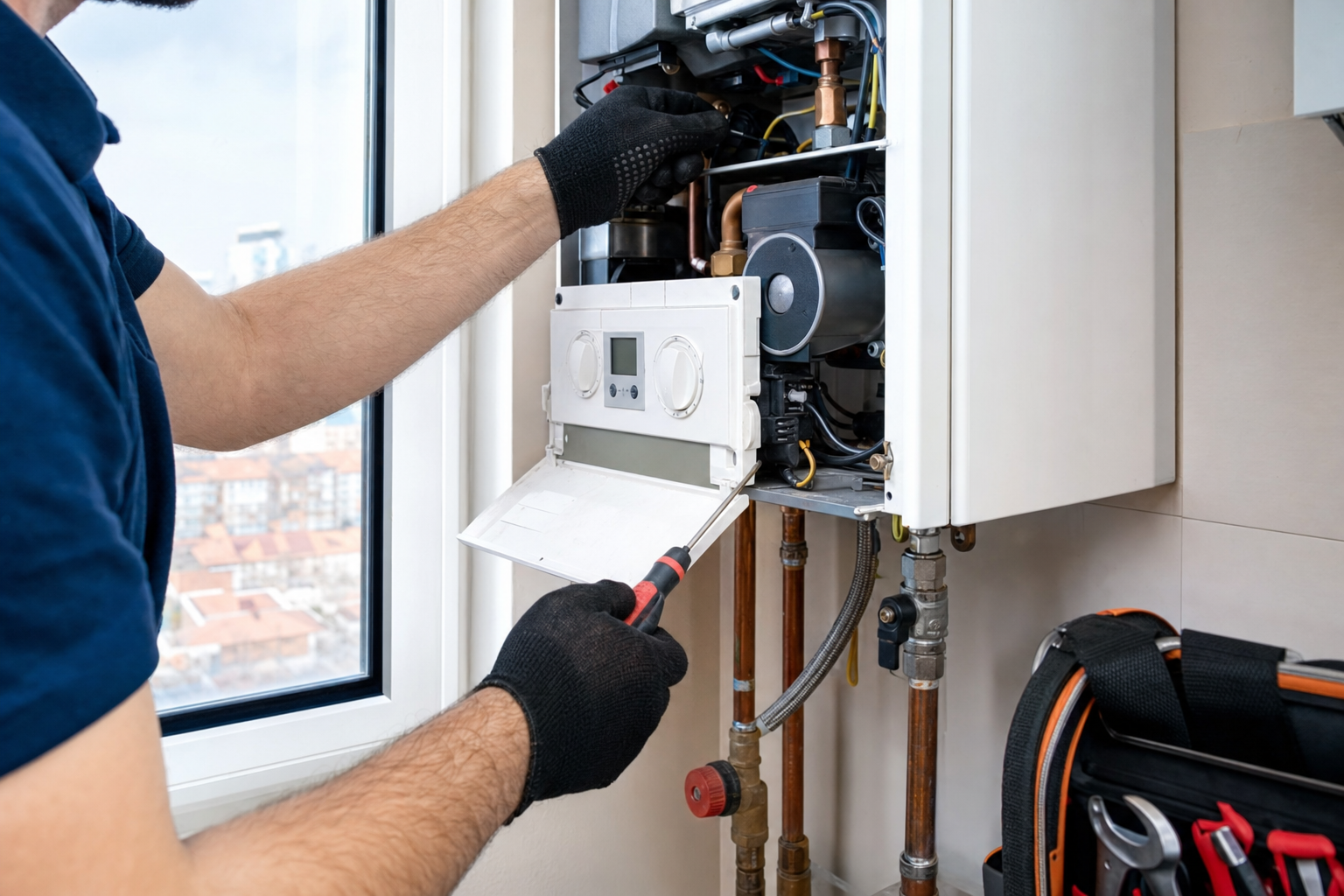
If you need gas engineers in London, MFD Heating provides practical help for homeowners, landlords, property managers and local businesses dealing with gas safety checks, landlord certificates, pipework faults, hob and oven problems, and suspected leaks. We focus on clear fault finding, sensible repair advice and safe next steps, so you can decide whether a repair is likely to be enough or whether replacement is the better long-term option.
Gas issues are rarely just an inconvenience. A weak flame, a boiler that will not behave properly, a gas hob that fails to ignite, or a smell that suggests a leak can all point to a problem that needs checking promptly. In many London properties, especially older homes, flats and mixed-use buildings, the decision between repair and replacement depends on access, age of the installation, the condition of the surrounding pipework and whether the fault is isolated or part of a wider system issue.
MFD Heating works across London, including areas near King's Cross, Waterloo Station, Hyde Park, Oxford Street and The City. We also support customers who need advice on related heating and plumbing issues where gas appliances, pipework or controls are involved. Call 020 3519 0292 or request a visit today.
Our approach is straightforward: identify the likely cause, explain the options clearly, and help you choose the most practical route. In some cases, a repair to a valve, connection, control, seal or appliance component is the best answer. In others, repeated faults, outdated parts or poor condition may make replacement the more sensible choice.
GAS Safety Checks in London
Gas safety checks are a key part of keeping a property safe and compliant, particularly where gas appliances are used regularly. A proper check looks at the condition and operation of the appliance, the surrounding installation and any obvious signs that something is not working as it should. In London homes and rental properties, this can include boilers, gas hobs, gas ovens and visible pipework.
Common reasons people request a gas safety check include a new smell of gas, a flame that burns unevenly, repeated ignition problems, or concern that an appliance is not performing as expected. For landlords and property managers, checks are also used to support ongoing duty of care and to identify issues before they disrupt tenants.
If you are deciding between repair and replacement, a safety check can help clarify the position. For example, a hob with one faulty burner may only need a targeted repair if the rest of the appliance is sound. But if a check shows corrosion, poor ignition across multiple burners, or unsafe pipework, replacement may be the more practical option.
Customers should ask for current Gas Safe details before gas work is carried out. Where a property has restricted access, older fittings or shared service routes, this is especially important because the inspection may need to be planned carefully around the building layout and appliance location.
GAS Safety Certificates in London
Gas safety certificates are commonly requested by landlords, letting agents and property managers who need evidence that gas appliances and related installations have been checked. These certificates are often part of routine property management rather than an emergency callout, but they can also uncover faults that need urgent attention.
When a certificate visit identifies a problem, the next step is not always immediate replacement. A certificate inspection may reveal something that can be repaired safely, such as a control issue, a damaged connector or a fault with ignition. In other cases, the findings may show that the appliance is no longer a sensible repair candidate because the parts are obsolete, the condition is poor, or the cost of repeated callouts is adding up.
For London properties near busy transport hubs and central districts, access and timing can matter. Flats around King's Cross or properties close to Oxford Street may need coordinated appointments because of concierge arrangements, parking restrictions or tenant availability. MFD Heating works with those practical realities in mind and keeps the focus on the fault, the risk and the next step.
If you need gas safety certificates in London, a clear inspection report is often the most useful outcome. It helps you understand whether the issue is a simple repair, a maintenance matter, or a sign that replacement should be planned before the fault becomes disruptive.
Annual Landlord GAS Certificates in London
Annual landlord gas certificates are a routine requirement for many rental properties, but they also serve a useful maintenance purpose. They can highlight developing faults in boilers, pipework, hobs and ovens before the tenant experiences a complete breakdown or a safety concern.
From a repair-versus-replacement point of view, annual checks often reveal patterns. A single isolated fault may be affordable to fix. Repeated issues across multiple visits, however, can indicate that the appliance is reaching the end of its useful life. For landlords, that decision is usually about balancing immediate cost, tenant comfort, future callout risk and the condition of the wider installation.
Typical symptoms that may come up during annual visits include intermittent hot water, pressure loss, poor ignition, unusual noise, or a gas appliance that works sometimes but not consistently. In older London flats and houses, these symptoms may be linked to age, wear, previous alterations or restricted access to components.
MFD Heating provides practical repair advice for landlords and property managers who need a clear view of what is urgent, what can wait and what should be replaced. The aim is to reduce avoidable disruption while keeping the property safe and functional.
GAS Pipe Repairs and Installations in London
Gas pipe repairs and installations need careful assessment because pipework issues can affect multiple appliances and the safety of the whole system. Common signs of a pipework problem include the smell of gas, low appliance performance, visible damage, loose fittings or a situation where a boiler or hob has stopped working after building work or refurbishment.
When deciding between repair and replacement, the main question is whether the pipework fault is localised or system-wide. A small, accessible section may be repairable if the surrounding pipe is in good condition. But if the pipework is old, corroded, poorly routed or altered several times over the years, replacement may offer a safer and more reliable solution.
In London, this often comes up in converted buildings, basement flats, and properties that have had multiple upgrades over time. Nearby locations such as Waterloo Station and The City often include a mix of older stock and renovated premises, so the condition of the installation can vary widely even within the same street.
We also support customers who need gas pipe repairs and installations in London as part of wider heating or appliance work. Clear diagnosis matters here: a visible symptom does not always mean the obvious part is the only problem. Pressure behaviour, appliance testing and accessible pipework checks all help build a more accurate picture.
GAS Hob Repairs and Installations in London
Gas hob faults are one of the most common reasons people contact a gas engineer. Symptoms can include burners that will not ignite, flames that are weak or uneven, a hob that clicks continuously, or a control that feels stiff or unresponsive. In some cases, the issue is simple and repairable. In others, the hob may be damaged, outdated or no longer worth repairing.
Likely causes include blocked burner ports, worn ignition components, damaged controls, poor gas supply to the appliance, or problems with the connection beneath the hob. If the hob is otherwise in good condition, a repair may be enough. If multiple burners are affected, the appliance has repeated faults, or the installation has become unsafe or awkward to service, replacement may be the better decision.
For landlords and homeowners, the practical question is often whether the hob can be made reliable again without ongoing callouts. MFD Heating gives clear repair advice based on what is actually found on site, rather than pushing a replacement where a repair makes sense.
We provide gas hob repairs and installations in London for properties where the appliance is part of a kitchen used daily and downtime matters. If the hob is in a busy household, a managed rental or a commercial-style setting, the value of a dependable repair is usually obvious.
GAS Oven Repairs and Installations in London
Gas oven faults can show up as uneven cooking, ignition problems, failure to heat properly, poor flame quality or a complete loss of function. Sometimes the issue is with the appliance itself; sometimes it is linked to controls, supply, ventilation or wear in a component that is no longer performing as it should.
As with hob faults, the repair or replacement decision depends on condition, age and reliability. A single component failure may be worth repairing if the oven is otherwise sound. But if the oven is old, parts are difficult to source, or the appliance has already needed several previous repairs, replacement may be the more economical option over time.
For properties near central London landmarks such as Hyde Park and Oxford Street, kitchen access, tenant schedules and building rules can all affect how quickly an oven issue can be assessed and resolved. That is why a clear diagnostic visit is often the best first step: it helps identify whether the fault is isolated or part of a bigger appliance problem.
MFD Heating supports gas oven repairs and installations in London with a practical, customer-focused approach. The aim is to get the appliance working safely and reliably, or to explain why replacement may be the better long-term answer.
GAS Leak Repairs in London
Suspected gas leaks need immediate attention. If you smell gas, hear hissing near pipework or appliances, or notice a sudden change in how a gas appliance is operating, the safest step is to act quickly and have the situation assessed. A leak can come from pipework, a connector, a valve, an appliance joint or another accessible part of the installation.
Repair versus replacement is especially important here because the visible leak point may not tell the full story. If the issue is isolated and the surrounding system is sound, a repair may solve it. If the pipework is deteriorated, the fittings are unreliable, or there are repeated leak concerns, replacement of the affected section may be the safer and more durable option.
Our gas leak repairs in London are handled with a focus on practical fault finding and clear explanation. Where possible, we identify the source, assess the surrounding installation and outline the next steps so you can make an informed decision. For landlords and property managers, that clarity is useful when balancing safety, access and tenant disruption.
If you suspect a leak, do not ignore it. Arrange an assessment and make sure the property is treated cautiously until the issue is understood. For urgent support, call 020 3519 0292.
How we decide between repair and replacement
When customers contact MFD Heating for gas engineers in London, one of the most common questions is whether a fault can be repaired or whether the appliance or pipework should be replaced. The answer usually depends on five things: the age of the item, the nature of the fault, the cost and availability of parts, the condition of the surrounding installation, and whether the problem is likely to return.
A repair is often the right choice when the issue is isolated, the appliance is otherwise in decent condition, and the fix is likely to restore normal operation without creating future risk. Replacement becomes more attractive when the same fault keeps returning, the appliance is inefficient or outdated, or the cost of repair is close to the cost of fitting a better long-term solution.
This is where practical experience matters. In London properties, especially flats and older buildings, access constraints and legacy pipework can make some repairs more involved than they first appear. A visible symptom may point to a deeper issue, so we always look at the wider picture before suggesting the next step.
What to expect from a visit
We keep the process simple. First, we listen to the symptoms you have noticed: no hot water, weak flame, ignition failure, pressure issues, strange smells, or a suspected leak. Then we inspect the accessible parts of the gas appliance or pipework, check the controls and look for signs that help narrow down the cause.
After that, we explain the likely fault, whether a repair is sensible, and what replacement would involve if that is the better option. Where a property needs follow-up work, we aim to be clear about the practical next steps so you can plan around tenants, family routines or business opening hours.
We also provide related support for plumber, emergency plumbing, boiler repairs, boiler installations, central heating, underfloor heating, water leaks and blocked drains where the issue overlaps with gas heating or appliance performance.
Aftercare and ongoing maintenance
Once a repair or replacement has been completed, aftercare is about reducing the chance of the same problem returning. That can include using appliances properly, arranging regular checks, keeping pipework accessible, and reporting small changes early before they become bigger faults.
For landlords and property managers, keeping a record of checks, repairs and recurring issues is useful because it shows whether an appliance is stable or drifting towards replacement. For homeowners, a simple note of symptoms and dates can help when comparing repair options in the future.
If you need gas engineers in London for a current problem, a routine safety check or advice on whether repair or replacement makes more sense, MFD Heating is ready to help. We work with local knowledge, clear repair advice and prompt appointments across London.
Call 020 3519 0292 or request a visit today.